Description
In December 1990, French television viewers witnessed a gaunt, 36-year-old writer discussing, with startling candor, his terminal AIDS diagnosis and the books he was writing about his illness. That writer was Hervé Guibert, and his appearance on the literary program Apostrophes catalyzed a national conversation about AIDS, literature, and the limits of self-exposure. He would be dead within a year, but in that final creative period, Guibert transformed illness into art with an honesty that both scandalized and moved France. Frédéric Andrau’s landmark biography reconstructs the short, intense life of a literary figure who challenged boundaries between fiction and memoir, beauty and abjection, privacy and publicity. From his complex relationship with Michel Foucault to his groundbreaking AIDS writings that have influenced generations of authors, this meticulously researched portrait reveals how a writer obsessed with death created a radical new language for living in extremity—and in doing so, became one of the most significant literary voices of his generation.
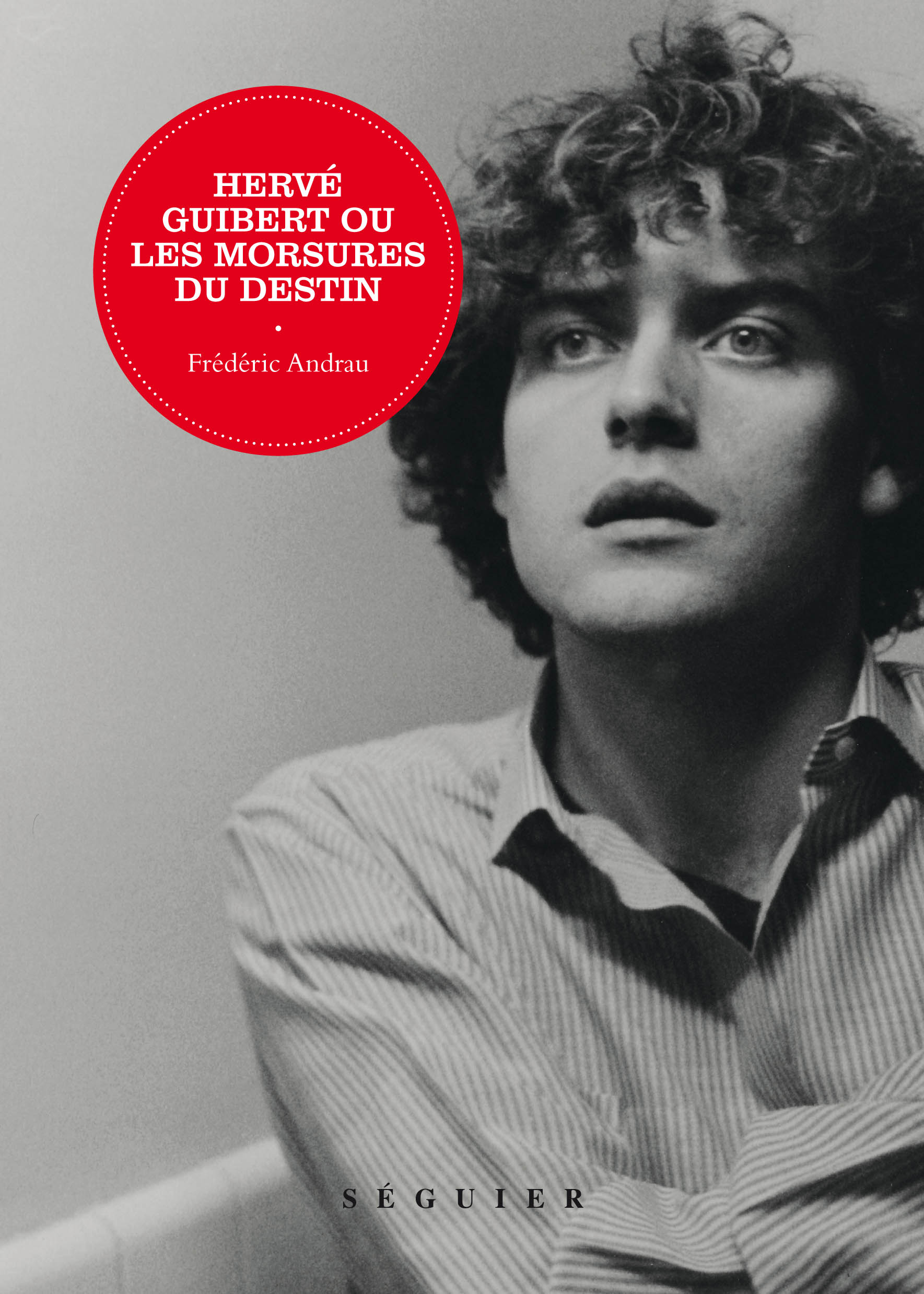
Hervé Guibert: Bite Marks of Destiny follows Hervé Guibert’s extraordinary journey from his stifling suburban childhood through his meteoric literary rise and his final years documenting his own demise with unsparing frankness.
Born to a conventional middle-class family, young Hervé was already fascinated by death and otherness. After fleeing to Paris at 18, he rapidly established himself as a literary enfant terrible with the publication of Propaganda Death (1977), a text of shocking corporeal frankness. While working as a photography critic for Le Monde, Guibert became part of Paris’s intellectual elite, developing a complex friendship with philosopher Michel Foucault that would later cause controversy.
Andrau’s biography meticulously chronicles Guibert’s development as both writer and photographer, exploring his creative obsessions, his romantic relationships, and his time at the Villa Medici in Rome. The narrative culminates with Guibert’s HIV diagnosis and his subsequent literary transformation, producing his groundbreaking AIDS trilogy—beginning with To the Friend Who Did Not Save My Life (1990)—that both scandalized and moved readers with its unflinching autofiction.
Drawing on extensive research and interviews with those who knew Guibert intimately, Andrau creates a nuanced portrait of a complex artist who defied categorization and turned his own mortality into a radical literary statement.
Contact: Kamelya Kudo, kamelya.kudo@placedesediteurs.com.
Frédéric Andrau is a French novelist and biographer. His previous works include Quelques jours avec Christine A (Plon, 2008) and Monsieur Albert (Editions de Corlevour, 2013), a critically acclaimed biography of Egyptian-French novelist Albert Cossery.
Prix :
22,00€
Format : 15 x 21 cm
344 pages
Parution : 05/05/2015
ISBN : 9782840496946




